
Las freidoras sin aceite se han convertido en uno de los electrodomésticos de cocina más populares en los últimos años, pero muchos compradores siguen haciéndose la misma pregunta: ¿Cómo se fabrican las freidoras sin aceite??
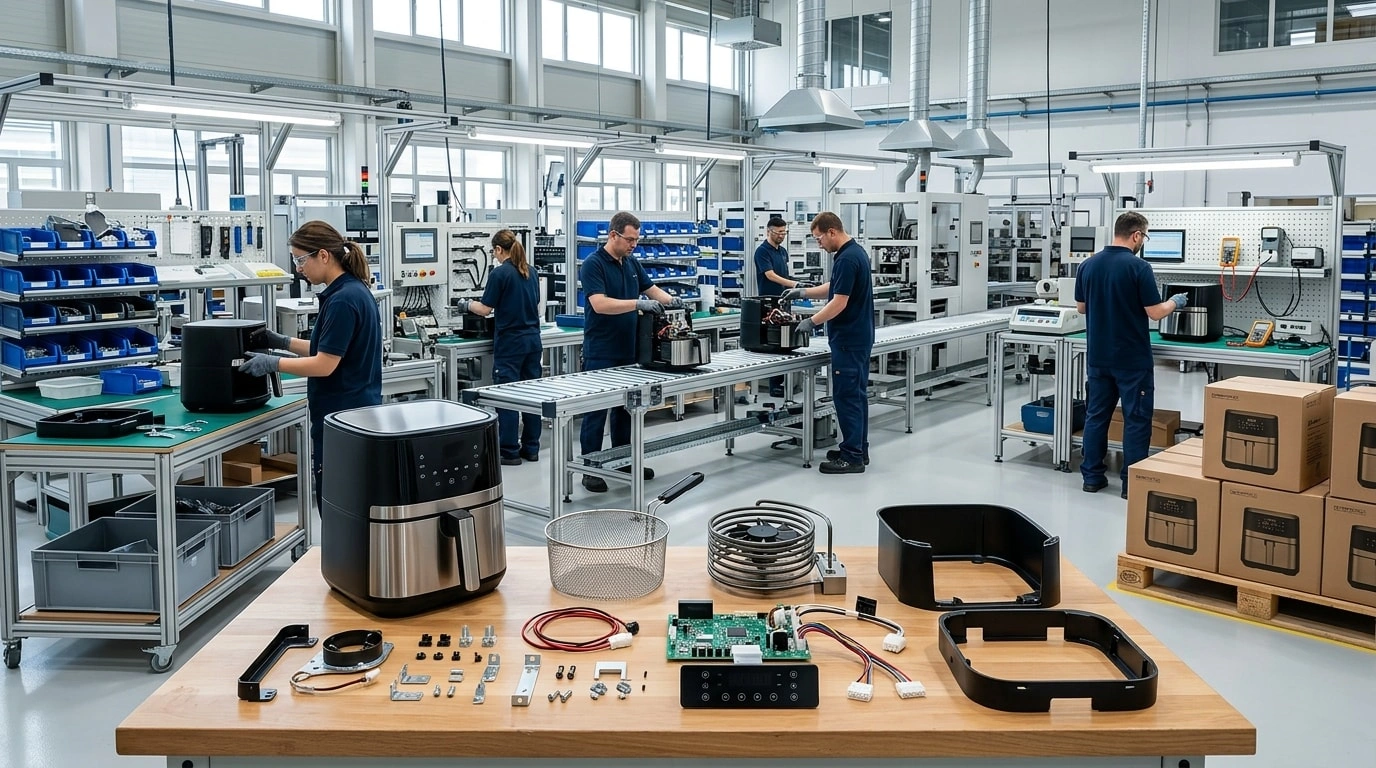
La respuesta es más técnica de lo que podría parecer. Una freidora de aire moderna no se ensambla simplemente con unas pocas piezas. El conjunto completo proceso de fabricación de freidoras sin aceite implica el moldeo de plástico, el conformado de metales, la integración de sistemas de calefacción, la ingeniería de flujo de aire, el ensamblaje de controles electrónicos, el recubrimiento de superficies y una rigurosa inspección de calidad.
Para los importadores, propietarios de marcas y mayoristas, comprender cómo se fabrican las freidoras sin aceite puede ayudar a evaluar la capacidad de la fábrica, la calidad del producto y la confiabilidad a largo plazo. En este artículo, explicaremos las etapas clave del proceso de fabricación de las freidoras sin aceite, incluyendo los materiales, los sistemas de calentamiento, el ensamblaje y el control de calidad.
1. Materiales exteriores: Construcción de la estructura exterior
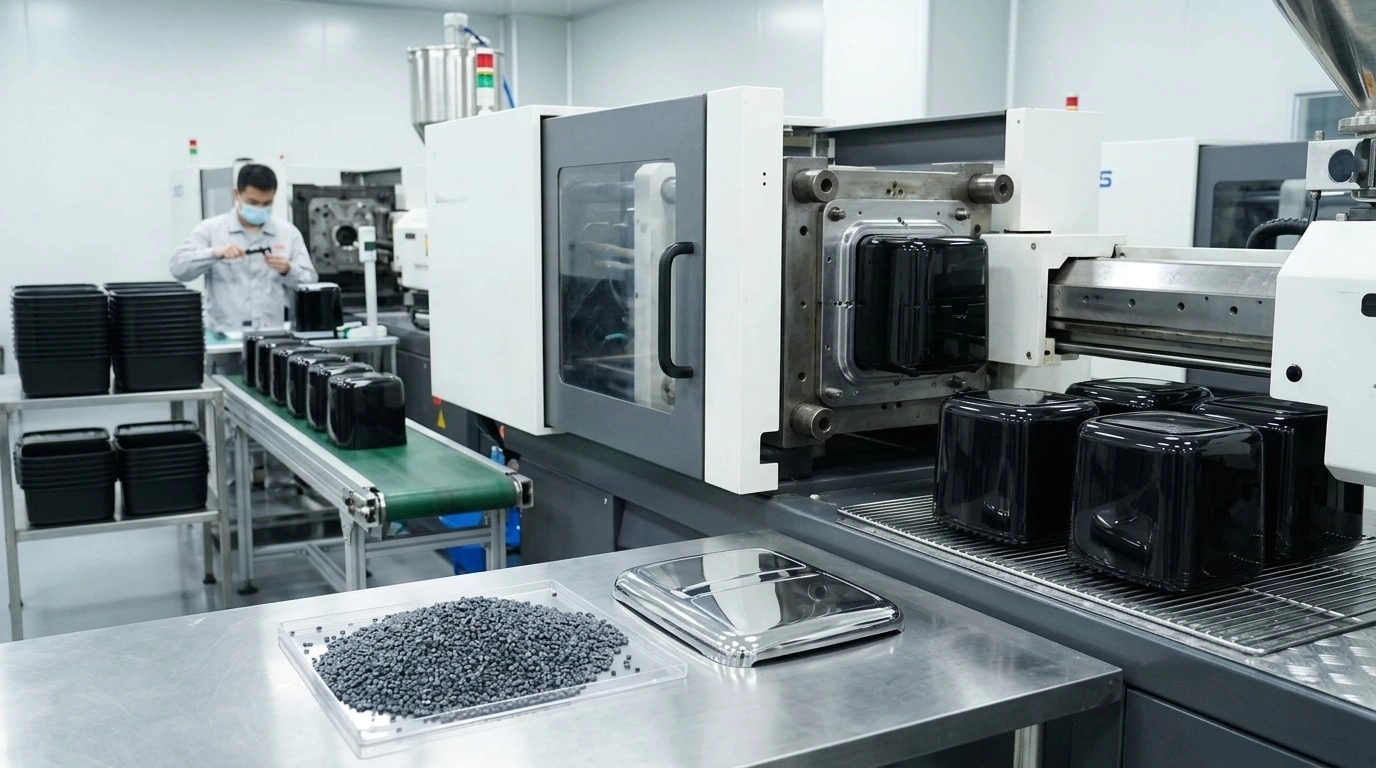
Uno de los primeros pasos en el proceso de fabricación de freidoras sin aceite está fabricando la carcasa exterior.
La mayoría de las carcasas de las freidoras sin aceite están hechas de materiales plásticos resistentes al calor, por lo general PP (polipropileno) o Mezclas de ABS/PC. Estos materiales se eligen porque ofrecen un buen equilibrio entre resistencia mecánica, resistencia al calor, calidad de la superficie y eficiencia en la fabricación. En la producción industrial, las materias primas plásticas se funden y se moldean mediante moldeo por inyección, lo que permite a los fabricantes crear carcasas exteriores uniformes con dimensiones precisas.
En el caso de los modelos de gama alta, algunas fábricas también añaden paneles decorativos de acero inoxidable para mejorar el aspecto y darle al aparato un toque más elegante. Estas piezas metálicas también pueden ayudar a mejorar la resistencia a los rayones en las superficies visibles.
Además de la apariencia, el diseño de la estructura exterior también debe tener en cuenta aislamiento térmico. Por lo general, los fabricantes dejan un espacio aislado entre la cámara de calentamiento y la carcasa exterior, lo que ayuda a mantener una temperatura superficial más segura para el uso diario.
2. Fabricación de moldes, creación de prototipos y desarrollo de muestras
Si alguien pregunta ¿Cómo se fabrican las freidoras sin aceite?, el sistema de calefacción es uno de los elementos más importantes de la respuesta.
Una freidora sin aceite funciona generando calor y, a continuación, haciendo que ese calor circule rápidamente alrededor de los alimentos. El sistema de calentamiento suele incluir un elemento calefactor metálico, materiales aislantes, conectores eléctricos y soportes. En muchos modelos, el elemento calefactor está fabricado con tubos de acero inoxidable y alambre de resistencia interno para proporcionar una salida de calor estable.
La capacidad de calentamiento suele diseñarse en función del tamaño del producto y del volumen de la canasta. Las freidoras de aire compactas pueden tener una potencia menor, mientras que los modelos más grandes, de tamaño familiar, suelen requerir más potencia para mantener una temperatura constante durante la cocción.
Un sistema de calefacción bien diseñado influye directamente en:
- velocidad de precalentamiento
- eficiencia en la cocina
- estabilidad de la temperatura
- textura final del alimento
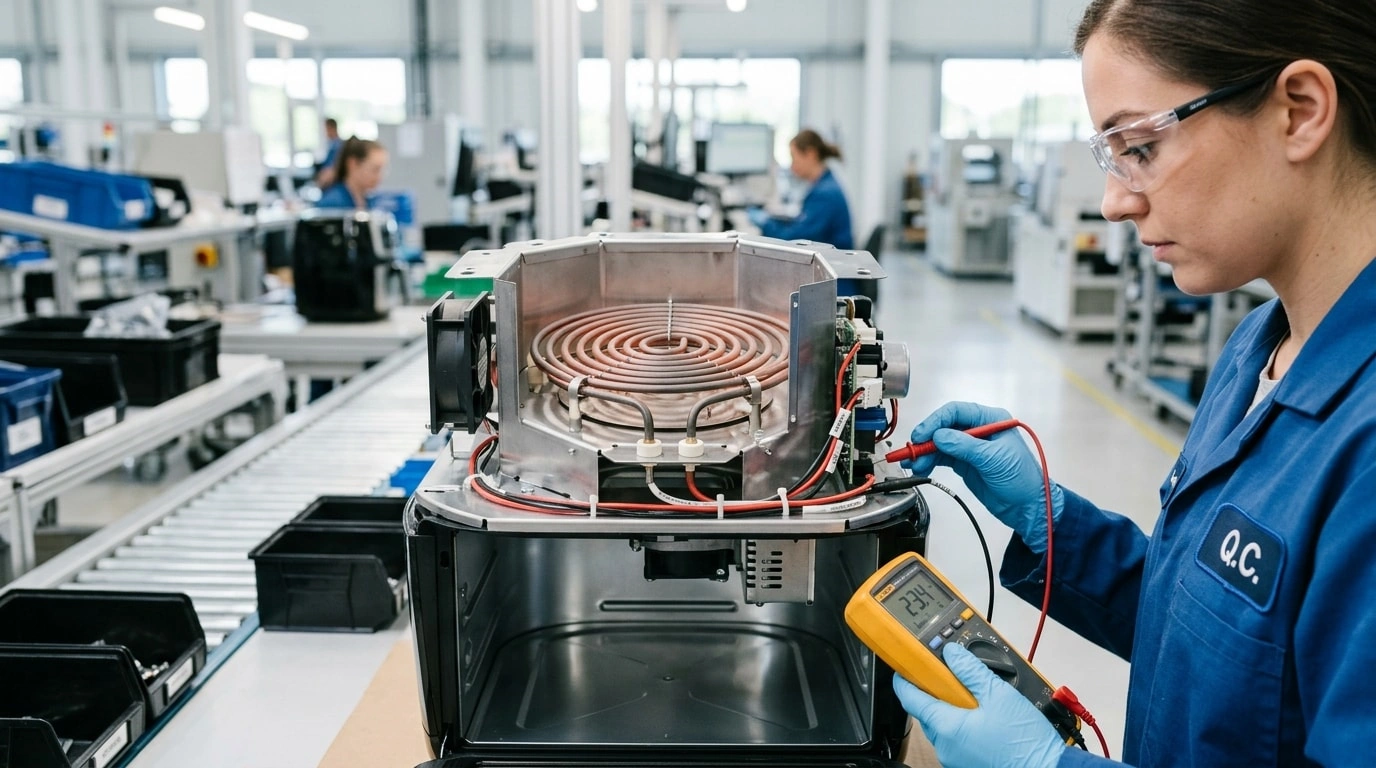
Por ello, la calidad del sistema de calefacción es uno de los indicadores clave de la capacidad de ingeniería de una fábrica.
3. Diseño del flujo de aire: circulación rápida y uniforme del aire caliente
Las freidoras sin aceite no cocinan los alimentos mediante fritura directa en aceite. En cambio, funcionan mediante circulación de aire caliente a alta velocidad. Por eso, el diseño del flujo de aire es una parte fundamental del desarrollo del producto.
En el interior del electrodoméstico, un sistema de ventilación se instala encima o cerca de la zona de calentamiento. Una vez que el elemento calefactor genera calor, el ventilador impulsa el aire caliente a través de la cámara de cocción. La forma de la cavidad interna, la posición del ventilador y la estructura de los conductos de aire influyen en la eficiencia con la que el calor se distribuye alrededor de los alimentos.
Un buen sistema de circulación de aire debería ayudar a crear:
- calentamiento uniforme desde múltiples ángulos
- mejores resultados de dorado
- menos puntos fríos
- un rendimiento de cocción más estable
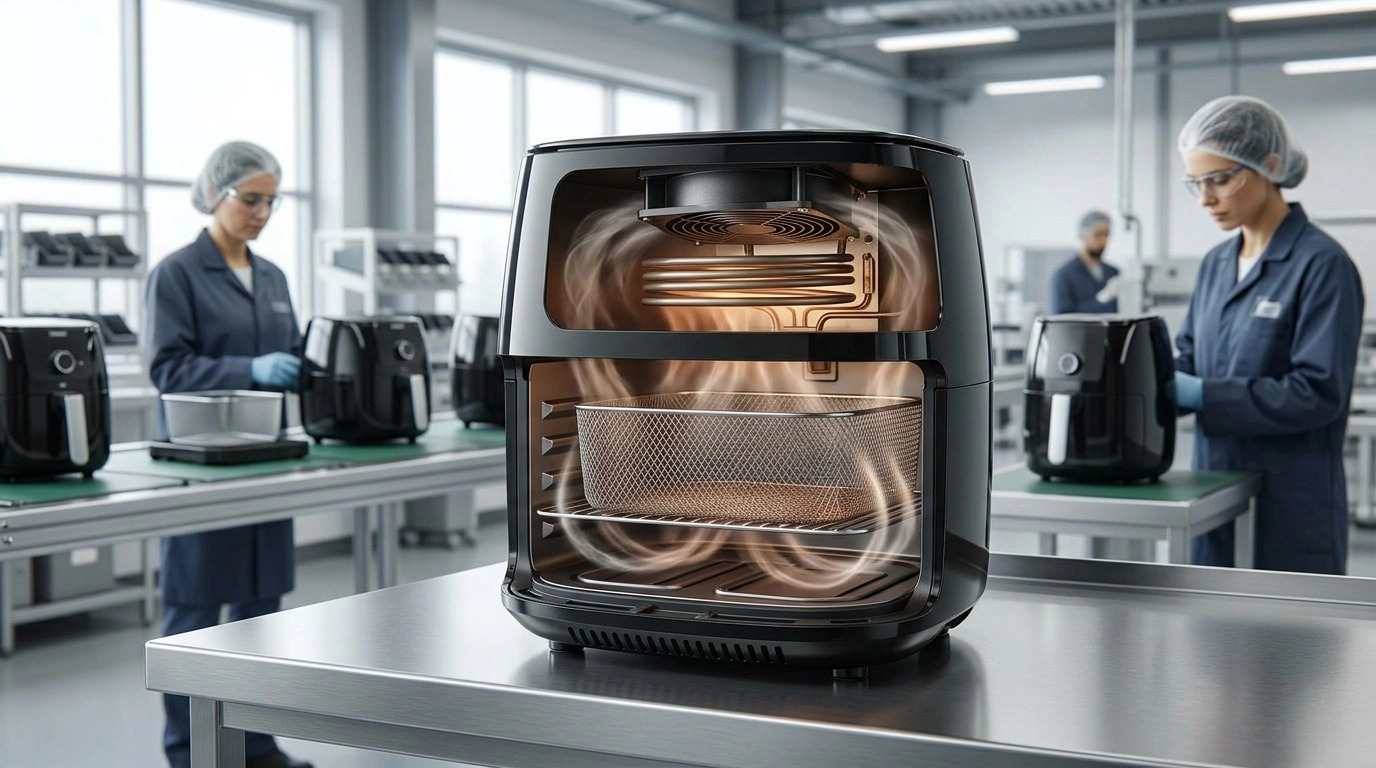
Algunas freidoras de aire también utilizan fondos de canasta o diseños de la cámara interna especialmente diseñados para mejorar la circulación del aire. En la práctica, un mejor diseño del flujo de aire se traduce en resultados de cocción más uniformes para el usuario final.
Por esta razón, la estructura del flujo de aire no es solo un detalle de diseño. Es una parte fundamental del conjunto proceso de fabricación de freidoras sin aceite.
4. Panel de control: sistemas mecánicos vs. sistemas digitales
Otra etapa importante para comprender cómo se fabrican las freidoras de aire caliente es el sistema de control.
Las freidoras de aire caliente suelen utilizar, ya sea controles mecánicos o controles digitales.
Paneles de control mecánicos
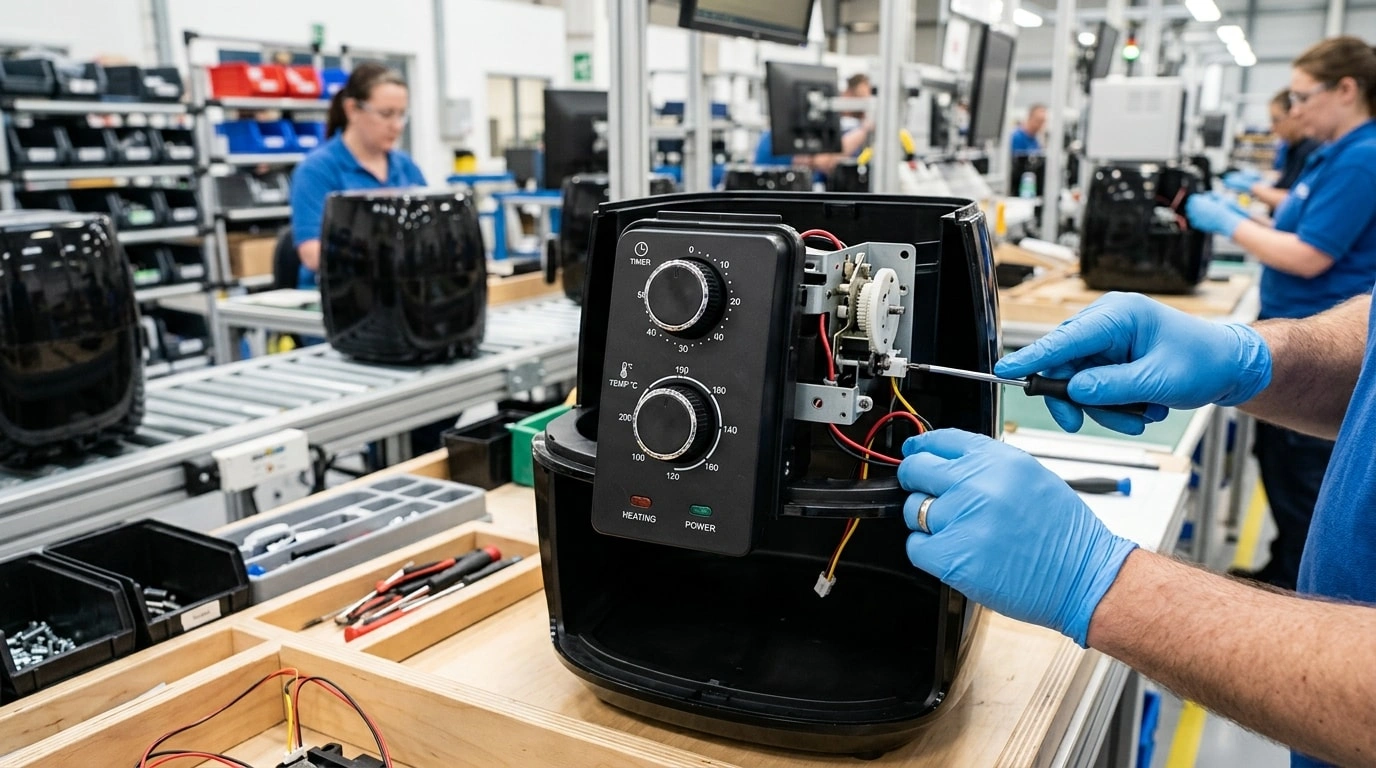
Las freidoras mecánicas suelen incluir un dial de temporizador y un dial de temperatura. Su estructura es relativamente sencilla, lo que las hace económicas y adecuadas para modelos básicos. Muchos compradores prefieren los sistemas mecánicos para el mercado de nivel básico porque son fáciles de operar y mantener.
Paneles de control digitales
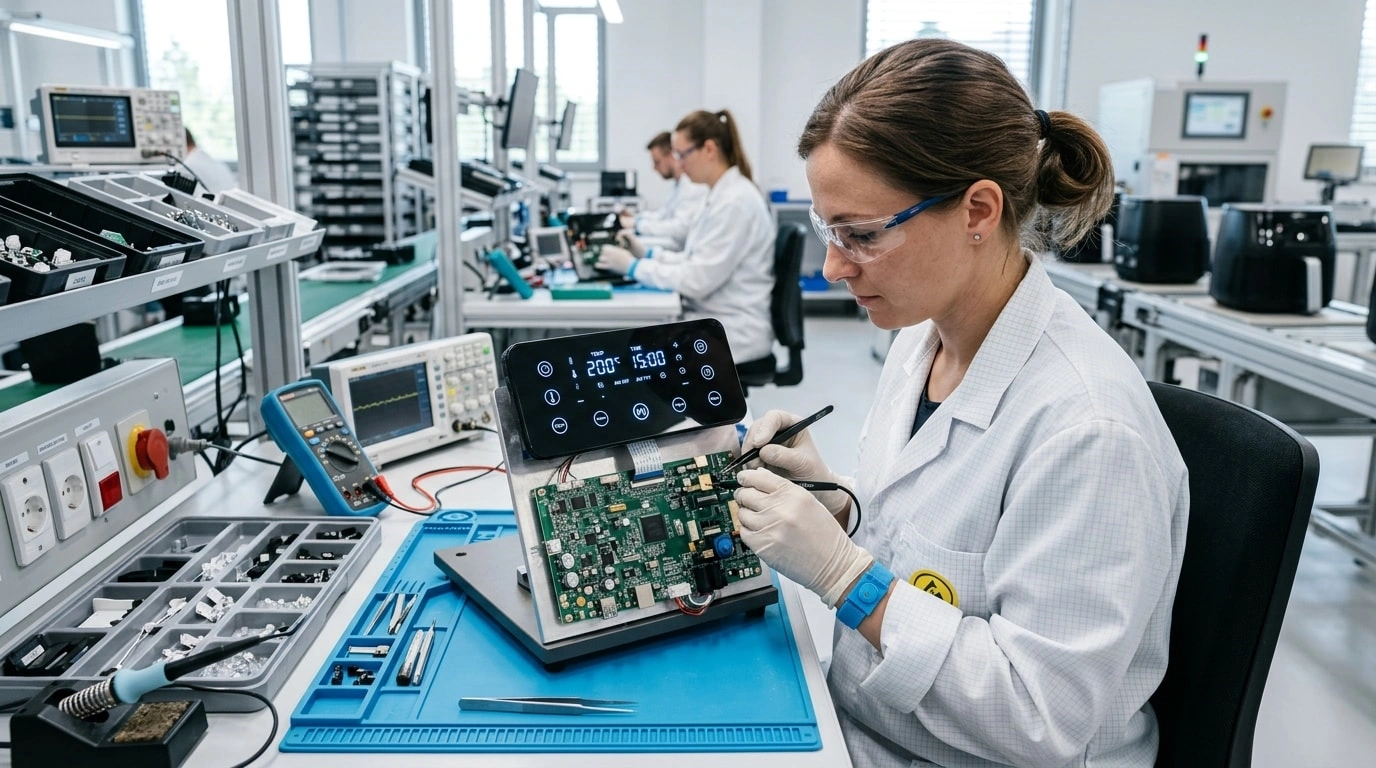
Las freidoras digitales se utilizan Placas de circuito impreso, sensores e interfaces táctiles o pantallas. Estos modelos pueden ofrecer ajustes de temperatura más precisos, múltiples programas de cocción preestablecidos y una experiencia de usuario más moderna.
La placa de control es uno de los componentes electrónicos más importantes del electrodoméstico. Conecta el sistema de calentamiento, el ventilador, los sensores y la interfaz de usuario en un solo sistema operativo. En las fábricas, las placas de circuito impreso y los paneles de control frontales suelen ensamblarse y someterse a pruebas antes de su integración completa en la máquina.
En los proyectos de OEM y ODM, el panel de control es también una de las áreas que más se personalizan, ya que los propietarios de marcas suelen querer diseños de panel, íconos, menús o estilos de visualización exclusivos.
5. Cesta y revestimiento interior: la zona de cocción más importante
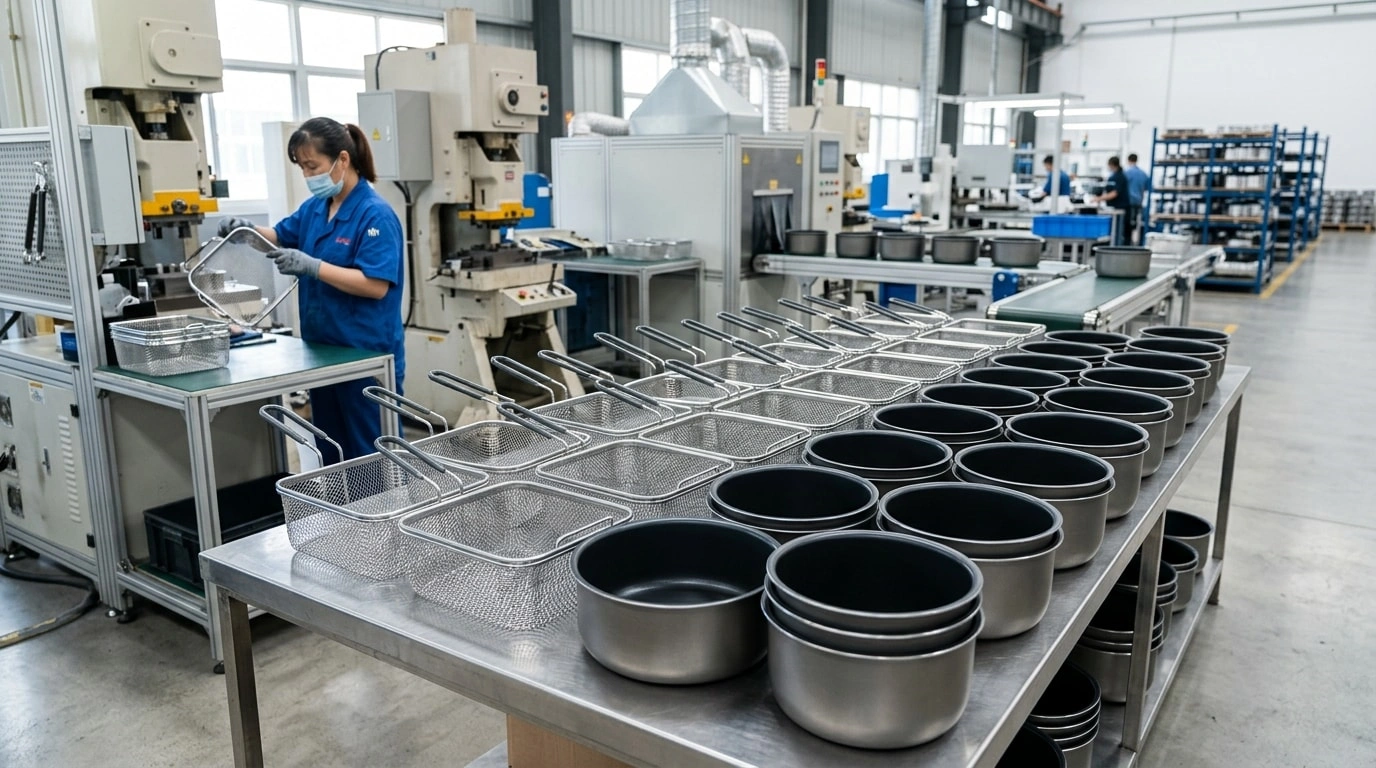
La canasta y el revestimiento interior son las partes que entran en contacto directo con los alimentos, por lo que se encuentran entre los componentes más importantes del proceso de fabricación de freidoras sin aceite.
Estas piezas suelen estar hechas de materiales metálicos, como el aluminio o el acero, y se fabrican mediante procesos de prensado de metal o embutición profunda. Una vez conformadas, las superficies se preparan para el recubrimiento.
El siguiente paso es el proceso de recubrimiento antiadherente. Esta etapa es fundamental, ya que influye tanto en el rendimiento de la cocción como en la facilidad de limpieza. Una canasta con el recubrimiento adecuado ayuda a evitar que los alimentos se peguen y facilita el mantenimiento para el usuario final.
En este sentido, los fabricantes suelen centrarse en varios puntos clave:
- acabado liso y uniforme
- adhesión estable del recubrimiento
- resistencia al calor
- durabilidad a largo plazo con un uso repetido
En una producción centrada en la calidad, la uniformidad del recubrimiento de la canasta se revisa minuciosamente antes del ensamblaje. Dado que los usuarios interactúan con la canasta cada vez que cocinan, este componente tiene un gran impacto en la satisfacción con el producto.
6. Línea de ensamblaje: cómo convertir los componentes en un electrodoméstico terminado
Una vez que las piezas principales están listas, el producto pasa a la etapa de ensamblaje.
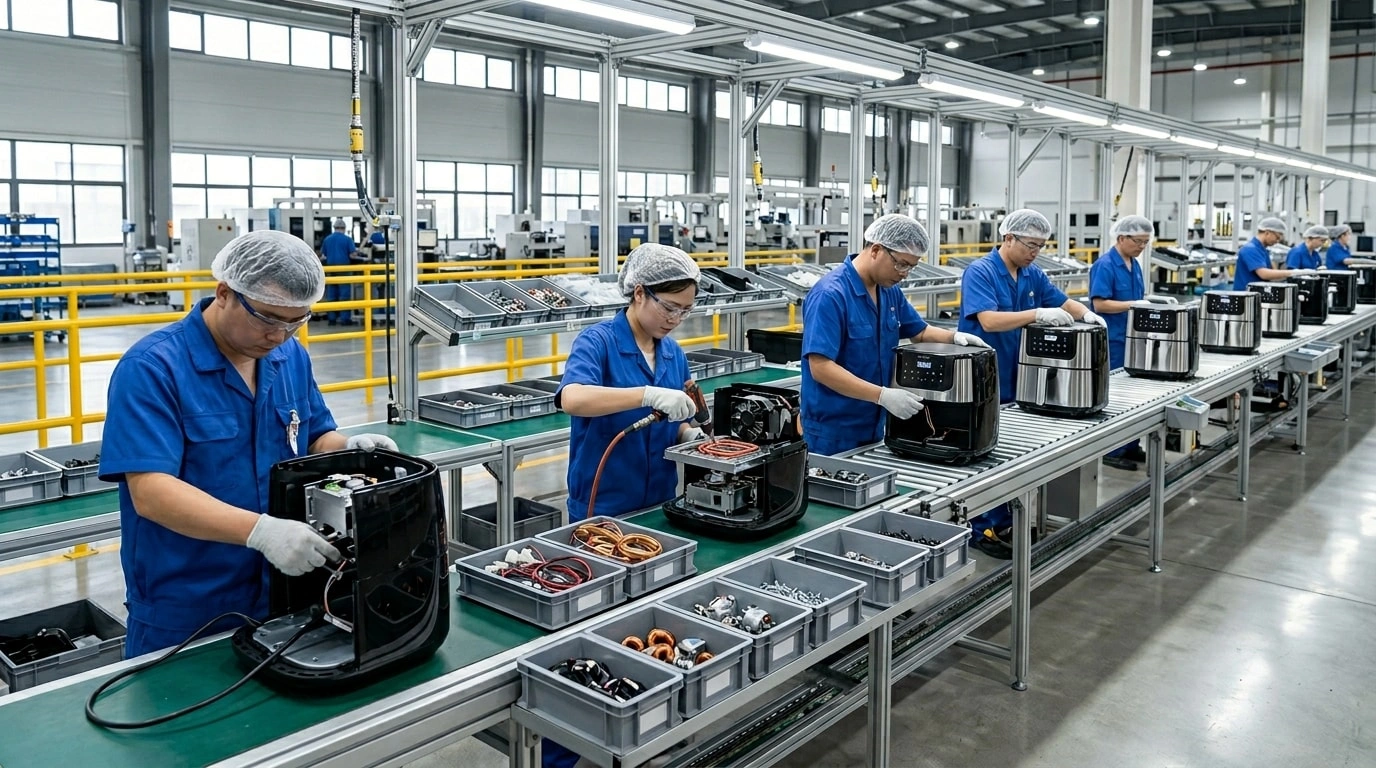
Una línea de ensamblaje estándar de freidoras sin aceite suele incluir los siguientes pasos:
Ensamblaje de la base
En la fábrica se instalan la estructura inferior, el cable de alimentación y las piezas internas de soporte.
Instalación de los componentes principales
El motor, el ventilador, el elemento calefactor y el armazón interno están integrados en el cuerpo principal.
Integración de sistemas de control
La placa de control, el cableado, las perillas o el panel de visualización están conectados y fijados en su lugar.
Instalación de la carcasa
La cubierta exterior se instala sobre la estructura interna y se fija con tornillos o piezas de sujeción.
Ajuste de la canasta y verificación de funcionamiento
Se montan y se revisan la canasta, la bandeja, la manija y las piezas móviles para garantizar un funcionamiento sin problemas.
El objetivo de la línea de ensamblaje no es solo la velocidad, sino también la uniformidad. Una línea de producción bien administrada ayuda a reducir los defectos, mejorar la repetibilidad y garantizar que cada unidad cumpla con el mismo estándar de fabricación.
7. Pruebas de seguridad: una parte fundamental del proceso de fabricación
No hay explicación de cómo se fabrican las freidoras de aire caliente no estaría completo sin las pruebas de seguridad.
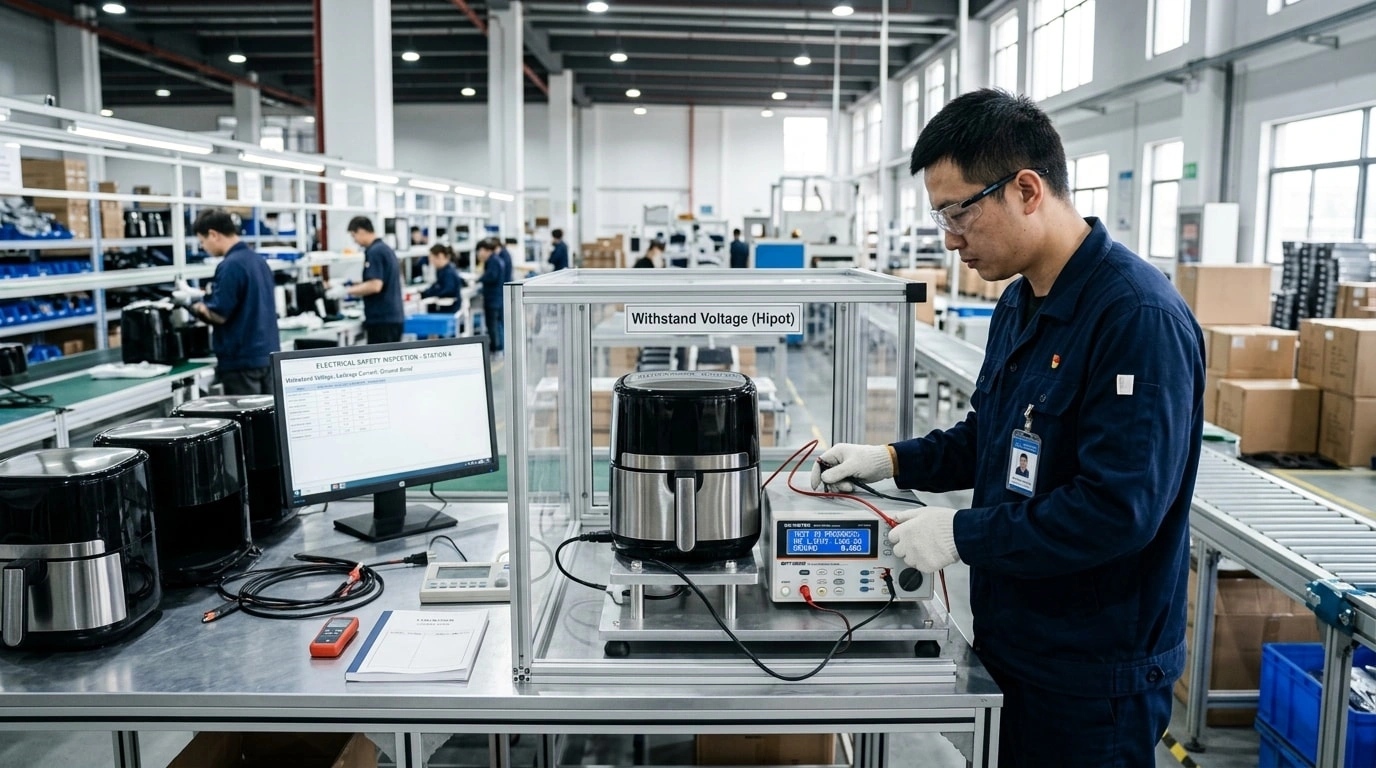
Dado que las freidoras sin aceite son aparatos eléctricos de calentamiento, deben someterse a pruebas de seguridad eléctrica antes de su envío. Estas pruebas están diseñadas para confirmar que el producto funcione de manera segura en condiciones normales.
Entre las revisiones de seguridad habituales en las fábricas se incluyen:
- prueba de resistencia a la tensión
- prueba de corriente de fuga
- comprobaciones de conexión a tierra o de aislamiento
- pruebas de funcionamiento eléctrico básicas
Estas inspecciones ayudan a reducir el riesgo de fallas eléctricas y a mejorar la seguridad de los productos para los mercados internacionales.
Para los compradores que trabajan con un fabricante de freidoras sin aceite, las pruebas de seguridad son uno de los temas más importantes que deben analizar, especialmente cuando los productos se preparan para la exportación.
8. Inspección final: control de calidad antes del envío
La etapa final de la proceso de fabricación de freidoras sin aceite es la inspección de salida.
Antes de su empaque, las unidades terminadas suelen someterse a un proceso de control de calidad final. Este paso puede incluir:
- inspección visual
- Revisión de la función de calefacción
- verificación del desempeño en cuanto a la temperatura
- pruebas de respuesta del ventilador y del sistema de control
- inspección del montaje de la canasta
- Revisión de olores o ruidos inusuales
- Confirmación del empaque y los accesorios
Algunas fábricas también realizan una prueba con la máquina vacía durante un breve periodo de tiempo para asegurarse de que la freidora de aire funcione correctamente antes de empaquetarla.
La inspección final es importante porque, aunque cada pieza por separado se haya fabricado correctamente, el aparato terminado debe funcionar como un producto completo. Por esta razón, el control de calidad de salida es esencial para reducir las quejas de los clientes, las devoluciones y los problemas posventa.
9. Por qué el proceso de fabricación es importante para los compradores
Para los consumidores, una freidora sin aceite puede parecer algo sencillo. Para los compradores, importadores y propietarios de marcas, el producto es mucho más que su apariencia.
Comprender el proceso de fabricación de freidoras sin aceite ayuda a los compradores a evaluar si una fábrica realmente puede ofrecer productos confiables a gran escala. La calidad de los materiales, el diseño del sistema de calentamiento, el rendimiento del flujo de aire, el recubrimiento de la canasta, la consistencia en el ensamblaje y las pruebas de seguridad influyen en el producto final.
Un proceso de fabricación confiable suele dar lugar a:
- mejor rendimiento en la cocina
- una calidad del producto más estable
- menos defectos
- mayor competitividad en el mercado
- mayor satisfacción del cliente
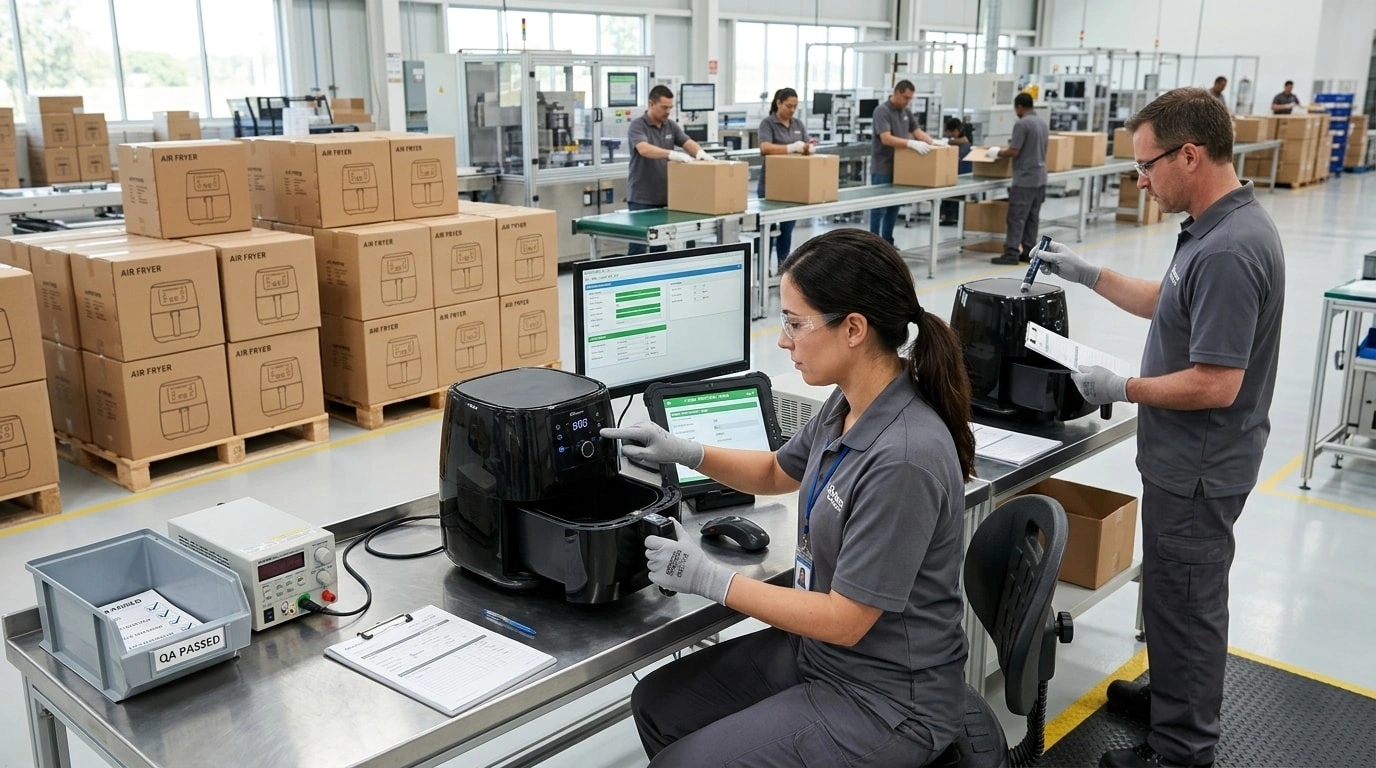
Por eso, los compradores serios deberían ir más allá de las fotos de los productos y hacer preguntas detalladas sobre cómo se fabrican las freidoras sin aceite.
Conclusión
Entonces, ¿Cómo se fabrican las freidoras sin aceite??
El proceso implica mucho más que un simple ensamblaje. Desde el moldeado de los materiales exteriores y la integración del sistema de calefacción hasta el diseño del flujo de aire, el ensamblaje del panel de control, el recubrimiento de la canasta, las pruebas de seguridad y la inspección final, cada etapa es fundamental para la calidad y el rendimiento del producto.
Para los importadores, mayoristas y marcas de electrodomésticos de cocina, comprender el proceso de fabricación de freidoras sin aceite es un paso importante a la hora de elegir al proveedor adecuado. Una fábrica profesional no solo debe ofrecer diseños atractivos, sino también demostrar estándares de producción consistentes, un control de calidad confiable y una sólida capacidad de ingeniería.
 Spanish
  English
  Hindi
Hindi  Indonesian
  Vietnamese
  Myanmar
  Russian
  French
  Japanese
  Korean